
Carrollton Garage Door Guide
Openers and Power Cuts in Carrollton Homes
Carrollton homes built 1973-2014 carry openers from three different eras. Here's what fails first when the power drops and why the fix isn't the same for every house.
- Licensed & Insured
- Same-Area Service Calls
- Upfront Pricing
Where People Go Wrong
Most people treat the opener like a light switch: if it doesn't respond, they assume the whole unit is dead and start pricing a replacement. In Carrollton, where the bulk of the housing stock went up between 1973 and 2014 with the median build year landing around 2000, that's often the wrong diagnosis.
A house from the early 1980s likely has had at least one opener swap already, sometimes a chain-drive unit installed without a battery backup at all. A house from the 2000s median era is more likely running a belt or screw-drive opener that came standard with a backup battery, but those batteries have a shelf life and nobody checks them until the day the power goes out and the door won't budge.
The other common mistake is ignoring the manual release cord until the exact moment it's needed, in the dark, during an outage, with no idea which way to pull it. If you've never located that red cord and tested it while the power is on, you're solving two problems at once instead of one when the lights go out.
The Problem
With roughly 62,590 owner-occupied houses in this service area, the opener population splits across a wide build window, and that split matters more than most homeowners realize. A 1970s-era chain-drive opener wired straight to household current has zero grace period when a breaker trips or a line goes down.
The door is simply stuck until power returns or you pull the release. Newer units, more common in the 2000s-median tier of the housing stock, often shipped with a battery backup that's supposed to carry the door through a short outage, but a battery that's been sitting unused for years frequently fails at the one moment it's tested.
The honest limitation here: we don't carry batteries for every opener model on the shelf, and older chain-drive units in the pre-2000 homes sometimes can't accept a backup at all without replacing the logic board or the whole head unit. If your opener predates battery-backup standards, the real fix during an outage is the manual release, not a battery you can't install.
What the Weather Here Does to It
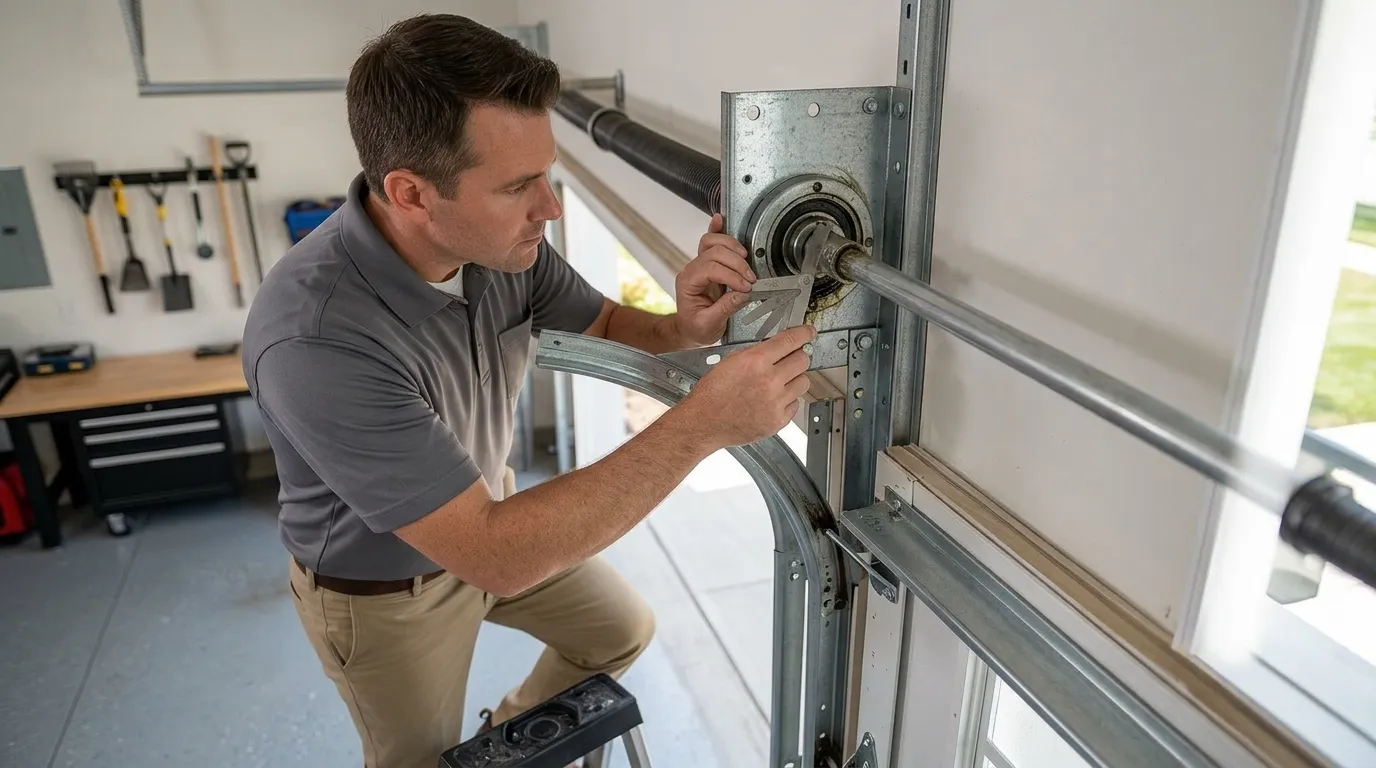
Carrollton sits in a moderate heat climate band, which doesn't produce the extreme swings that crack circuit boards outright, but it does put steady thermal stress on an opener's electronics over years, especially in an unconditioned garage where the box sits above a hot car engine all afternoon. Capacitors in the opener's logic board and the seals on the battery backup housing degrade faster under repeated warm-to-hot cycling than they would in a genuinely cold climate, even without a single dramatic heat event to point to.
That steady wear matters for the power-cut question specifically: a battery backup that's been living in a warm garage for a decade is far less likely to hold a charge than one installed last year, regardless of brand. If your opener and its backup are original to a house built in the 1990s or 2000s, the moderate but constant heat here has likely already shortened that battery's working life more than the calendar suggests.
When It Stops Being a DIY Job
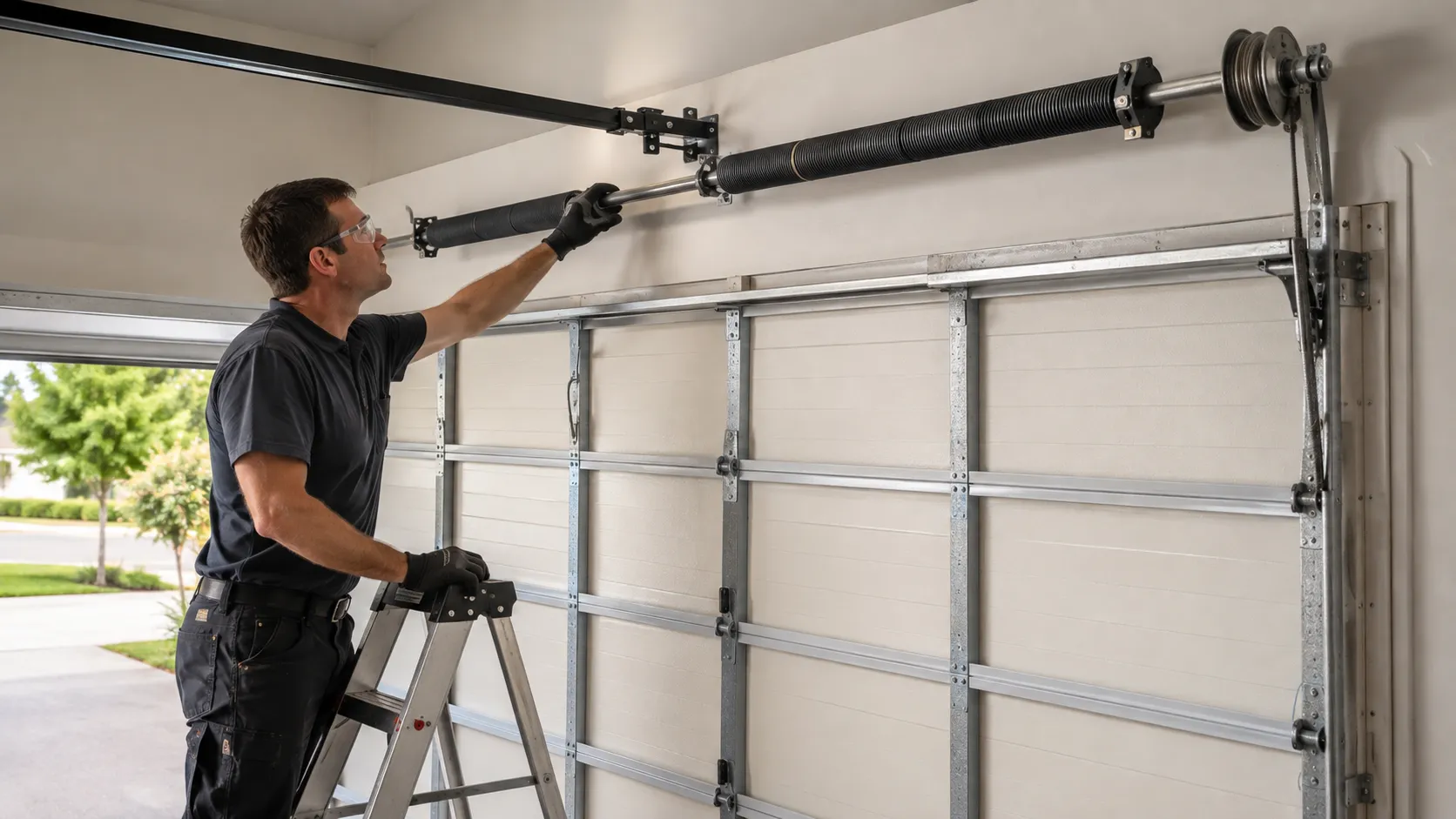
Testing your manual release cord and checking whether your opener has a backup battery at all is something any homeowner can do in five minutes. Replacing a battery in a unit designed to accept one is usually still manageable on your own. Where it stops being a DIY job is when the opener predates backup capability, when the logic board itself has degraded from years of garage heat, or when you're not sure whether the door won't open because of the opener or because of a spring or cable that's actually failed at the same time.
Across the roughly 93,793 households in this area, opener age varies as much as the housing stock itself, from units original to 1970s construction to ones installed alongside a garage remodel in the last decade. If you can't tell whether your problem is electrical, mechanical, or both, that's the point to call rather than keep testing parts.
Getting it wrong on a spring under tension isn't a five-minute mistake to walk back from. Get in touch if you're not sure which side of that line you're on.
How We Can Help
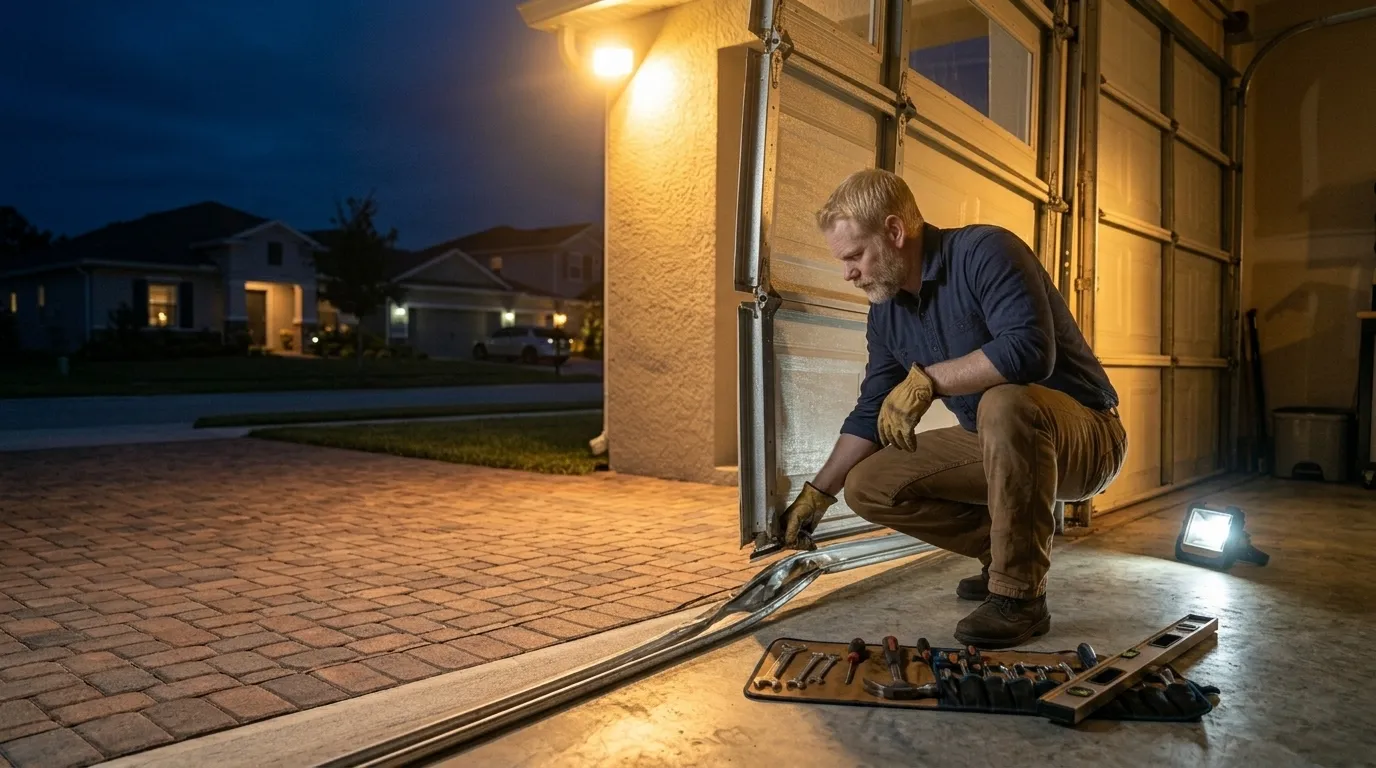
Garage Door Repair
Springs, cables, tracks, rollers, and openers fixed by a tech who explains the problem before touching anything.
Learn more →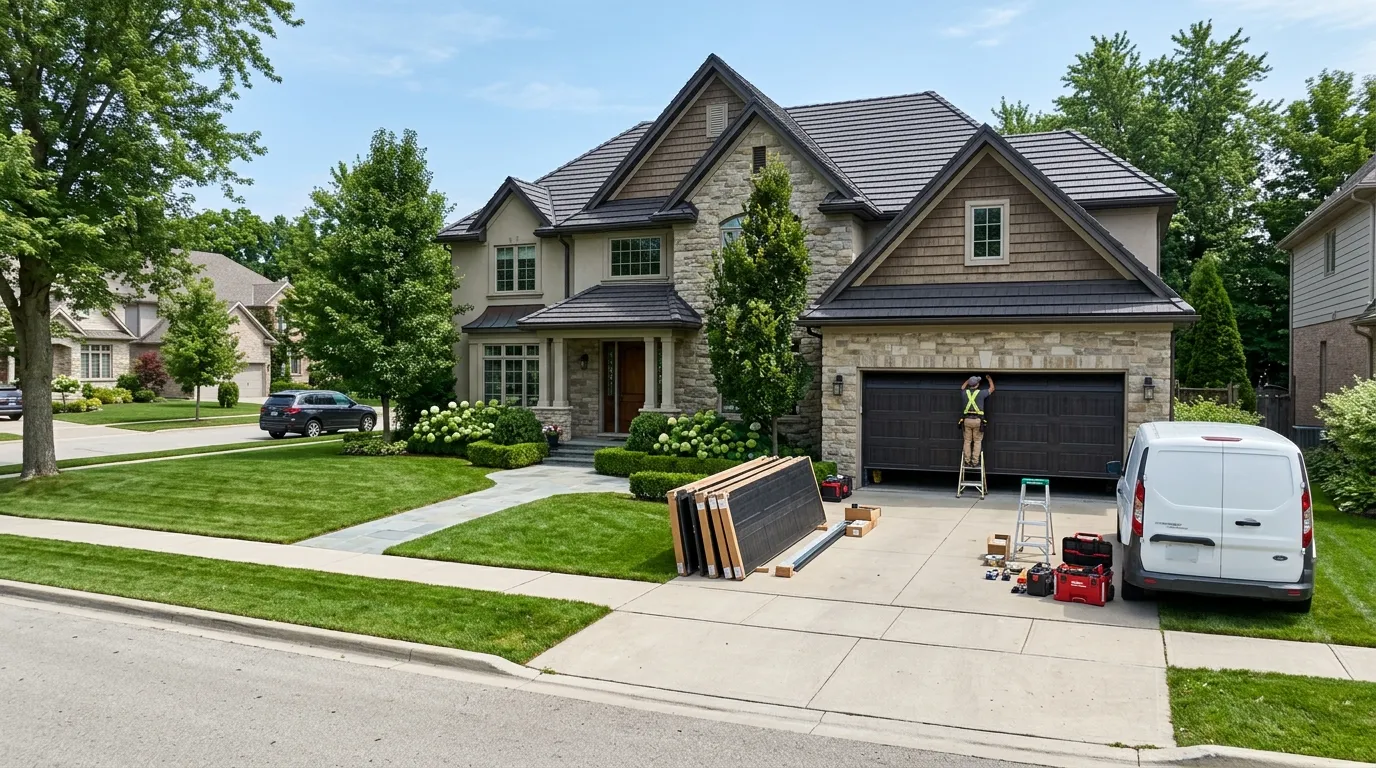
Garage Door Installation
New sectional doors sized and installed for the housing stock actually built in this area.
Learn more →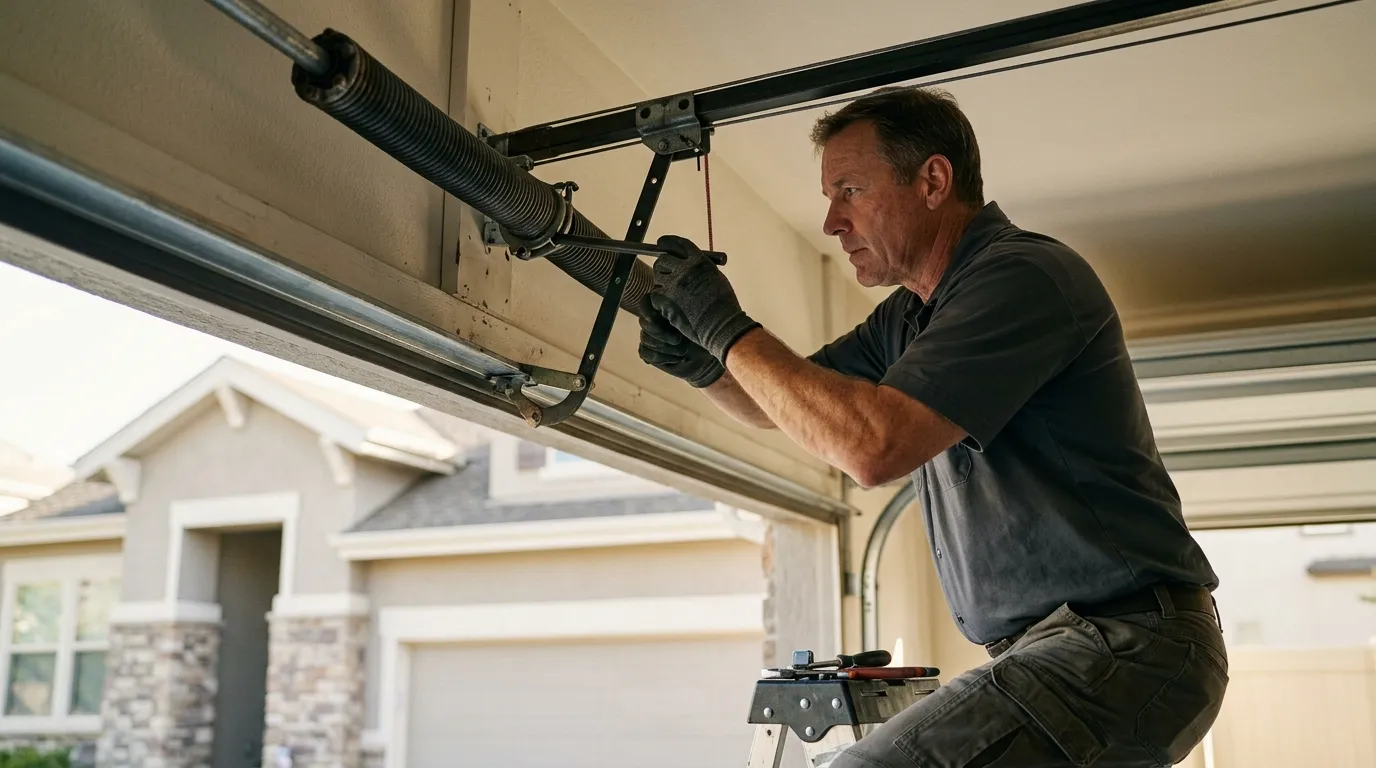
Garage Door Service
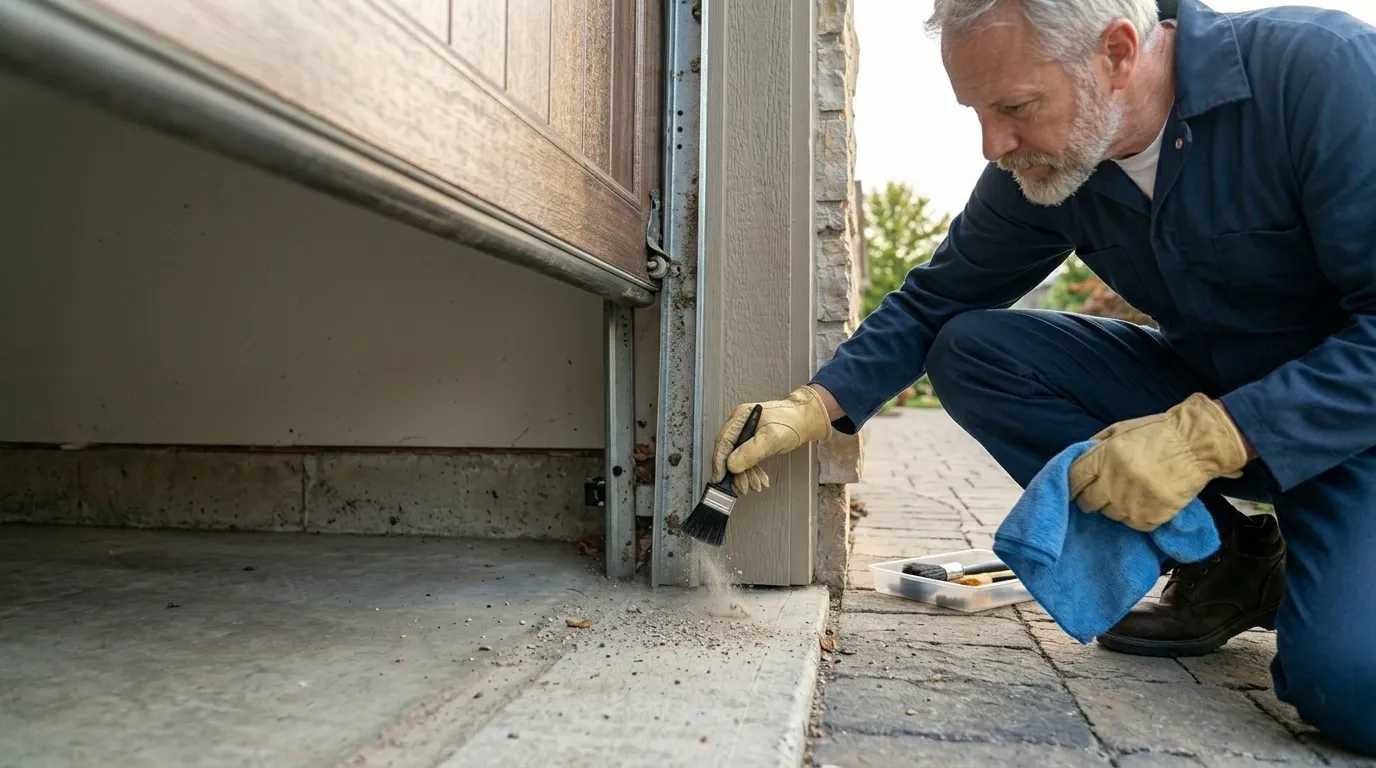
Tune-ups, lubrication, and safety checks that catch a small problem before it becomes a service call.
Learn more →Frequently Asked Questions
Does my garage door opener have a battery backup already?
It depends on when it was installed. Openers from the 2000s median era of Carrollton's housing stock often came standard with a battery backup; older chain-drive units from the 1970s and 80s frequently didn't and may not accept one without replacing the head unit.
Why did my opener battery fail during the first outage it faced?
Backup batteries sitting unused in a warm garage for years lose capacity even if never drawn down. Carrollton's moderate heat climate accelerates that wear gradually, so a battery can look fine on the shelf and still fail the first time it's actually needed.
Can any opener be upgraded to have battery backup?
Not always. Some older chain-drive units built for houses from the earlier end of the 1973-2014 range don't have the logic board to support a backup battery at all, which means the manual release is the real fallback during an outage, not an add-on battery.
Where's the manual release cord and how do I use it?
It's the red cord hanging from the trolley on the opener rail. Pulling it disconnects the door from the opener carriage so you can lift the door by hand. Test it once while power is on so you know which direction to pull before you actually need it in the dark.
Have a Door That Needs a Second Opinion?
Call and describe what it is doing - we will tell you what it likely is.