
Carrollton Garage Door Guide
The Noise Your Door Is Making Isn't Random
Carrollton homes went up mostly between 1973 and 2014. Here's what the grinding, popping, and squealing from that era of hardware actually means.
- Licensed & Insured
- Same-Area Service Calls
- Upfront Pricing
Where People Go Wrong
Most people treat every garage door sound the same way: they spray something on it and hope. That works maybe once. The trouble in Carrollton is that the housing stock here mostly went up between 1973 and 2014, with the median build year landing around 2000, and that means most doors in this service area are running builder-grade torsion hardware that's now fifteen to fifty years old.
A squeal on a 2003-built door in Northwest Carrollton isn't the same problem as a squeal on a house from the earlier wave near Original Town. The spring gauge, the track mount, even the roller material changed across that stretch of decades, and spraying WD-40 on all of it treats a torsion spring bearing the same as a hinge, which it is not. The other mistake is waiting.
A noise that shows up once and goes away usually comes back worse, because it's telling you a part is starting to fail, not that it already has. Across the 23 named areas that make up this service territory, we see the same handful of noise patterns over and over, because the housing got built in the same handful of years, with the same handful of hardware choices.
The Problem
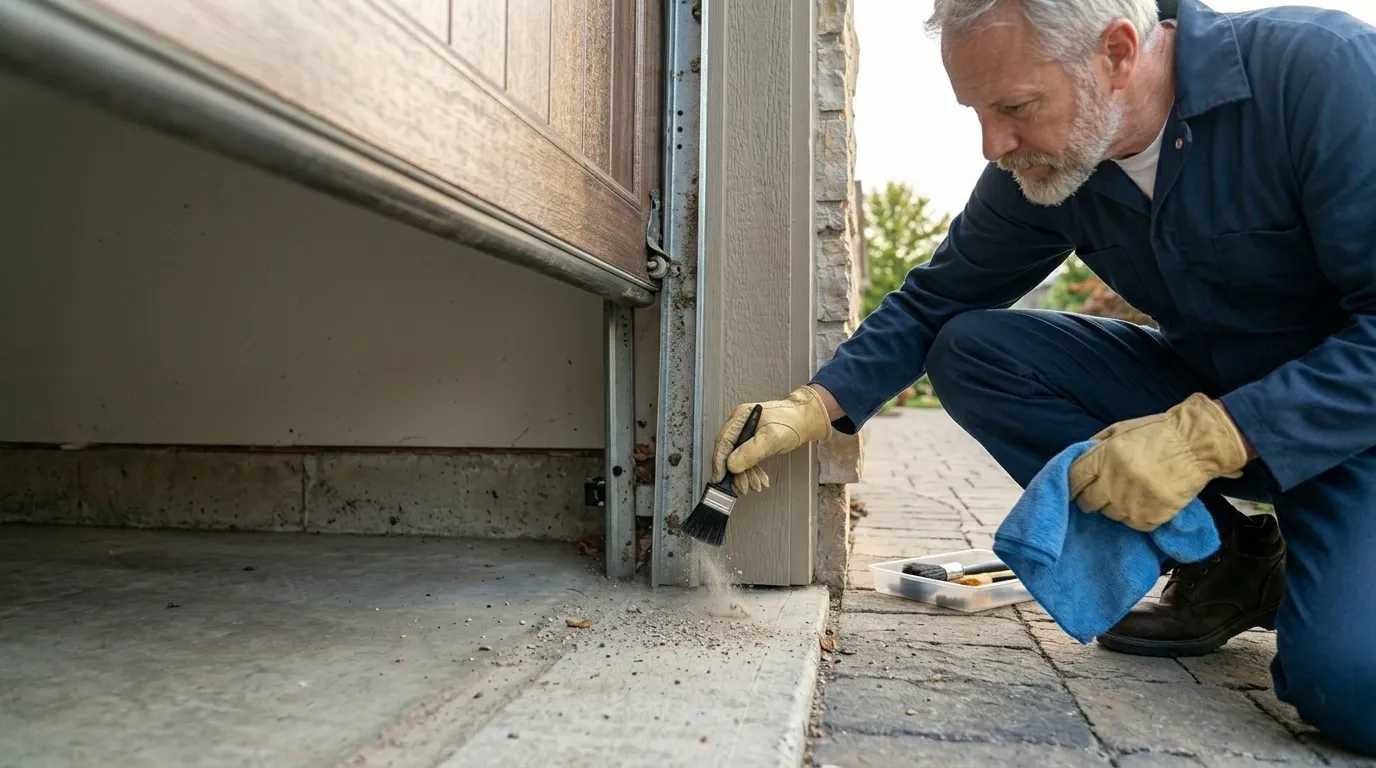
A rhythmic thump once per rotation is almost always a flat spot on a roller, and on doors from the 2000s wave that's usually a nylon roller past its life, not a bent track. A sharp bang followed by the door refusing to move is a broken spring, and if the house is a torsion-spring build (most of what went up from the 1990s on), that's a two-person, right-tool job, not a weekend fix. A steady grinding as the door travels is often the opener's drive gear wearing down, which shows up a lot in the 2000s-median stock now old enough for that part to give out.
A high-pitched squeal at the top of travel points to the torsion spring itself needing lubrication or replacement. None of these are cosmetic. A door that's making noise is a door that's losing tolerance somewhere in the system, and in a service area where owner-occupied houses make up the large majority of the housing stock, that system usually hasn't been touched since it was installed.
What the Weather Here Does to It
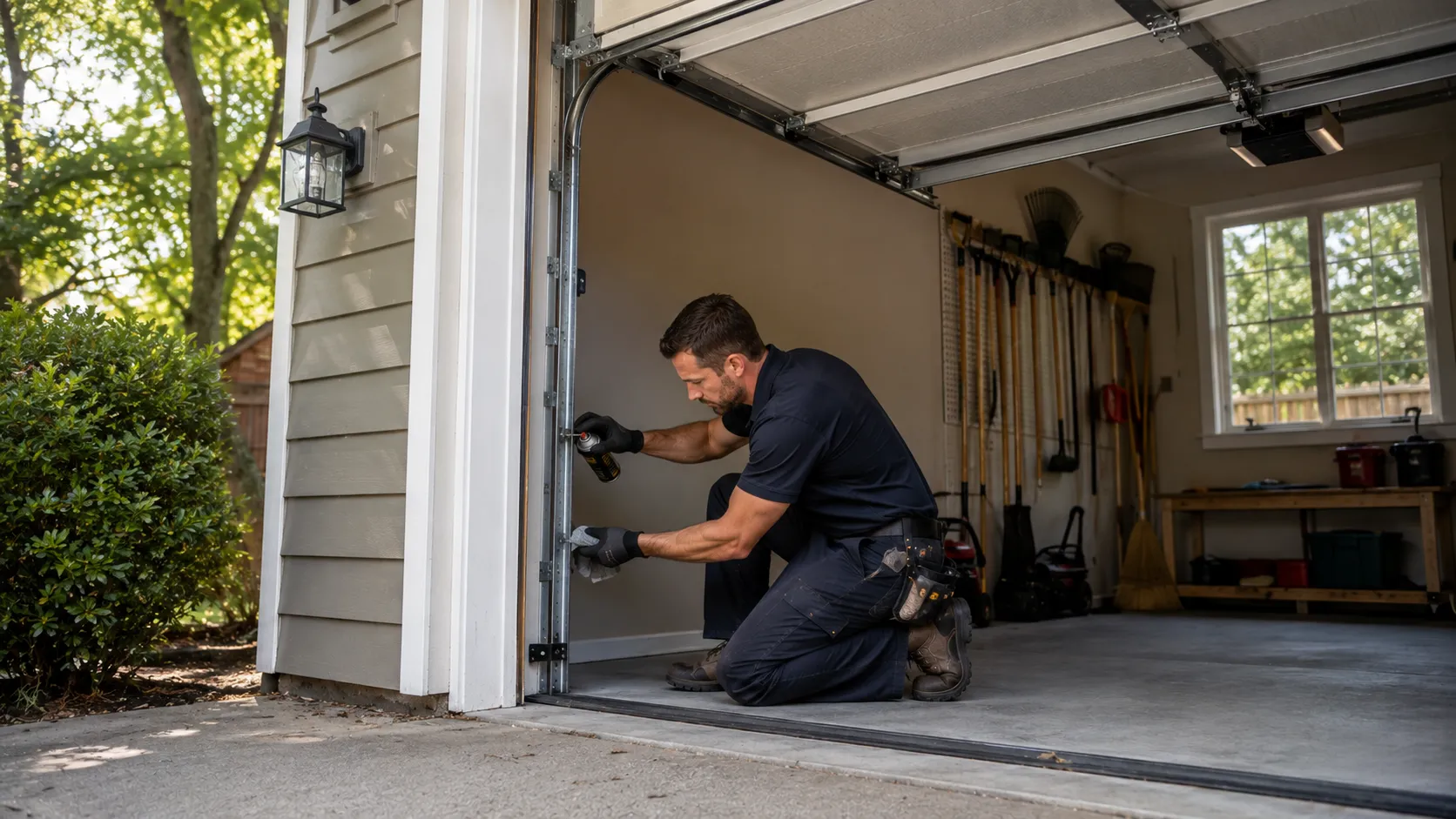
Carrollton sits in a moderate-heat climate band, not an extreme one, so we don't get the deep-freeze stiffening that cracks grease and shrinks steel the way northern towns do. What we do get is sustained summer heat that dries out factory lubricant faster than owners expect, especially on doors built in the 1990s and 2000s that came with a thinner factory-applied grease than what's used now. Dried lubricant on a torsion spring doesn't just make noise, it lets coil surfaces rub metal-on-metal, which speeds up fatigue.
Heat also expands aluminum track sections slightly, and on a track that's already a little out of plumb from twenty years of settling, that expansion is enough to turn a quiet door into a noisy one for a few months out of the year and then quiet down again come fall. If your door only squeals in July and August, that's not a coincidence, that's the heat finding the weak point.
When It Stops Being a DIY Job
Lubricating hinges and rollers is fine to do yourself, and it solves more noise complaints than people expect. Where we draw the line is anything touching the torsion spring itself. On the torsion-spring systems common across houses built from the 1990s onward here, the spring is wound under enough tension to cause serious injury, and there's no safe way to adjust or replace one without the right bars and a clamp.
We also won't tell you a full replacement is needed when a $30 roller set fixes it, but we also won't talk you through a spring job over the phone, because that's the one repair on this list where a mistake doesn't mean a callback, it means an ER visit. If your door is making noise and you're not sure which category it falls into, that's the actual judgment call, not the noise itself.
How We Can Help
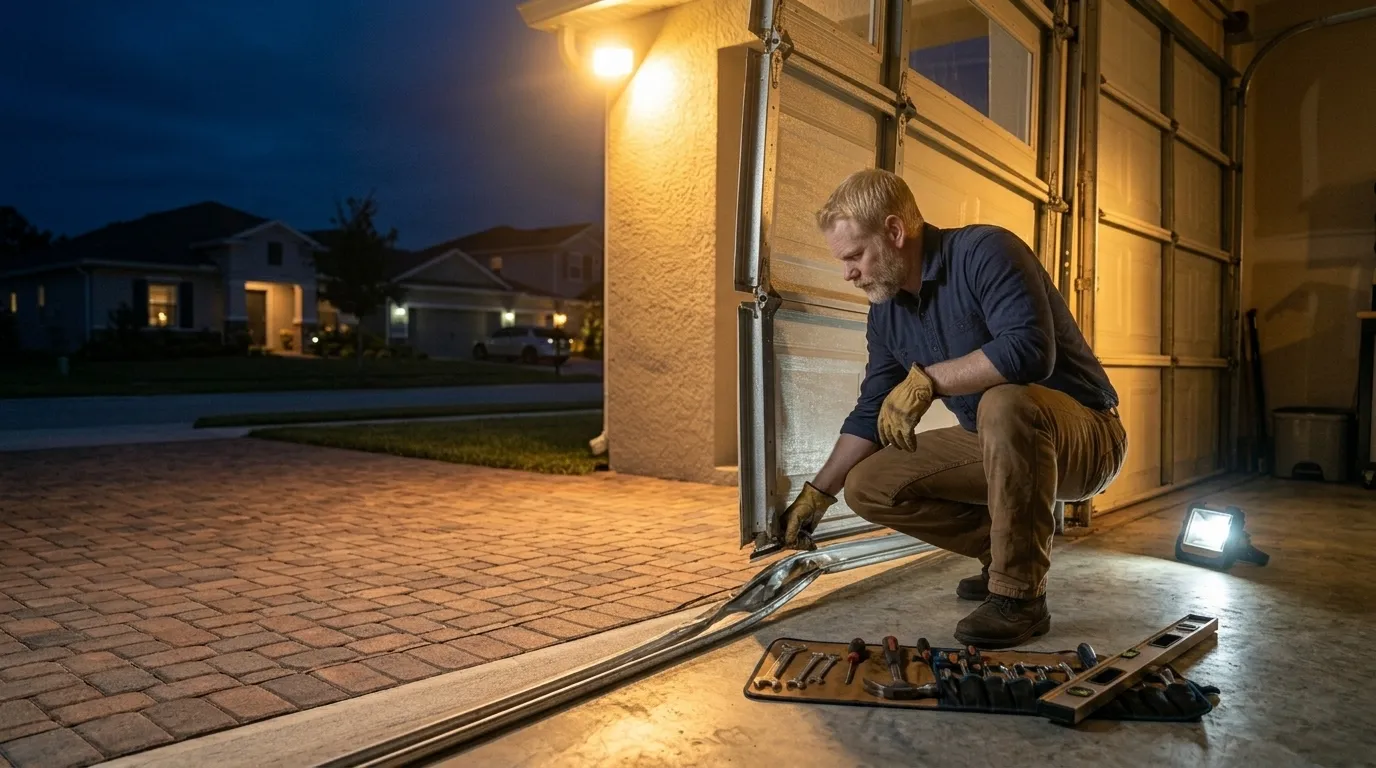
Garage Door Repair
Springs, cables, tracks, rollers, and openers fixed by a tech who explains the problem before touching anything.
Learn more →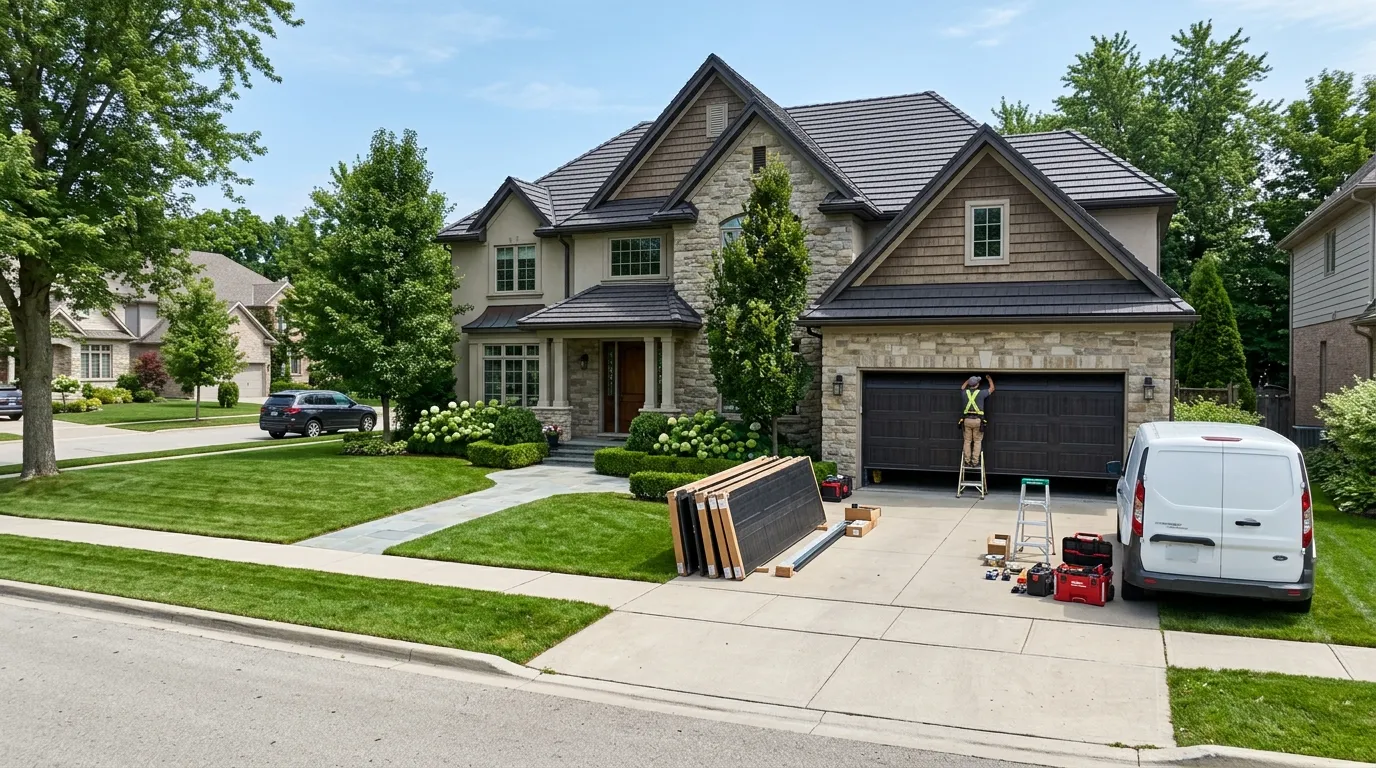
Garage Door Installation
New sectional doors sized and installed for the housing stock actually built in this area.
Learn more →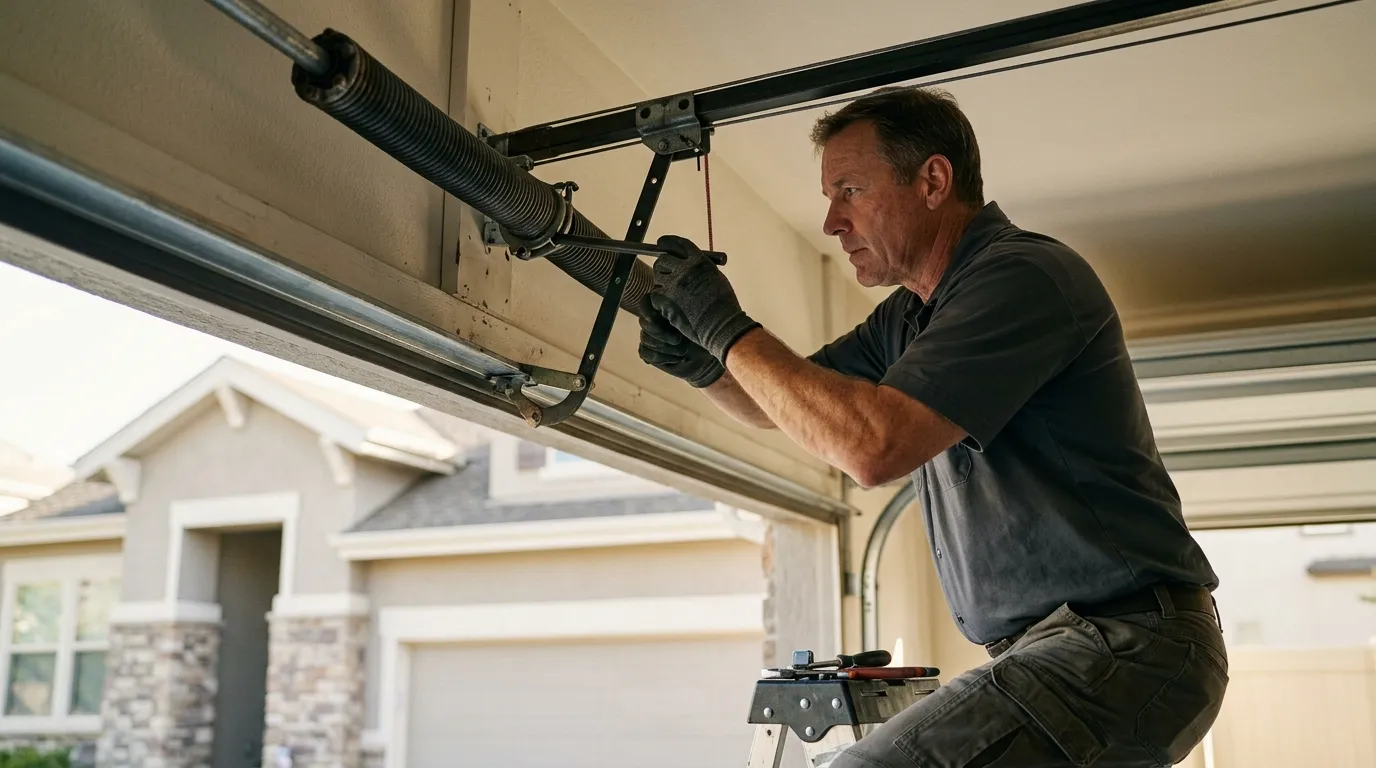
Garage Door Service
Tune-ups, lubrication, and safety checks that catch a small problem before it becomes a service call.
Learn more →Frequently Asked Questions
Why does my garage door only squeal in the summer?
Heat dries out the factory lubricant on the torsion spring and rollers faster than cooler months do. Carrollton's climate band is moderate rather than extreme, so this shows up as seasonal noise rather than year-round failure, but it still means the lubricant needs attention before the spring surfaces start rubbing metal-on-metal.
Is a grinding noise from the opener or the door itself?
Grinding that happens as the door travels is usually the opener's drive gear wearing down, common in units installed with 1990s and 2000s-era homes that are now old enough for that part to fail. A grinding noise that stops when the opener is disengaged points to the opener, not the door hardware.
Can I fix a broken spring myself?
No. Torsion springs are wound under high tension and require winding bars and a clamp to handle safely. This is the one repair we won't walk homeowners through by phone, regardless of how simple the rest of the fix looks.
My house is in Central Carrollton and built in the early 2000s. Is my hardware different from a newer house nearby?
Likely yes. Spring gauge, roller material, and track mounting changed over the decades this area was built out, so a 2000s-built door often needs different parts than one from a house built ten or fifteen years later, even a few miles apart.
Have a Door That Needs a Second Opinion?
Call and describe what it is doing - we will tell you what it likely is.