
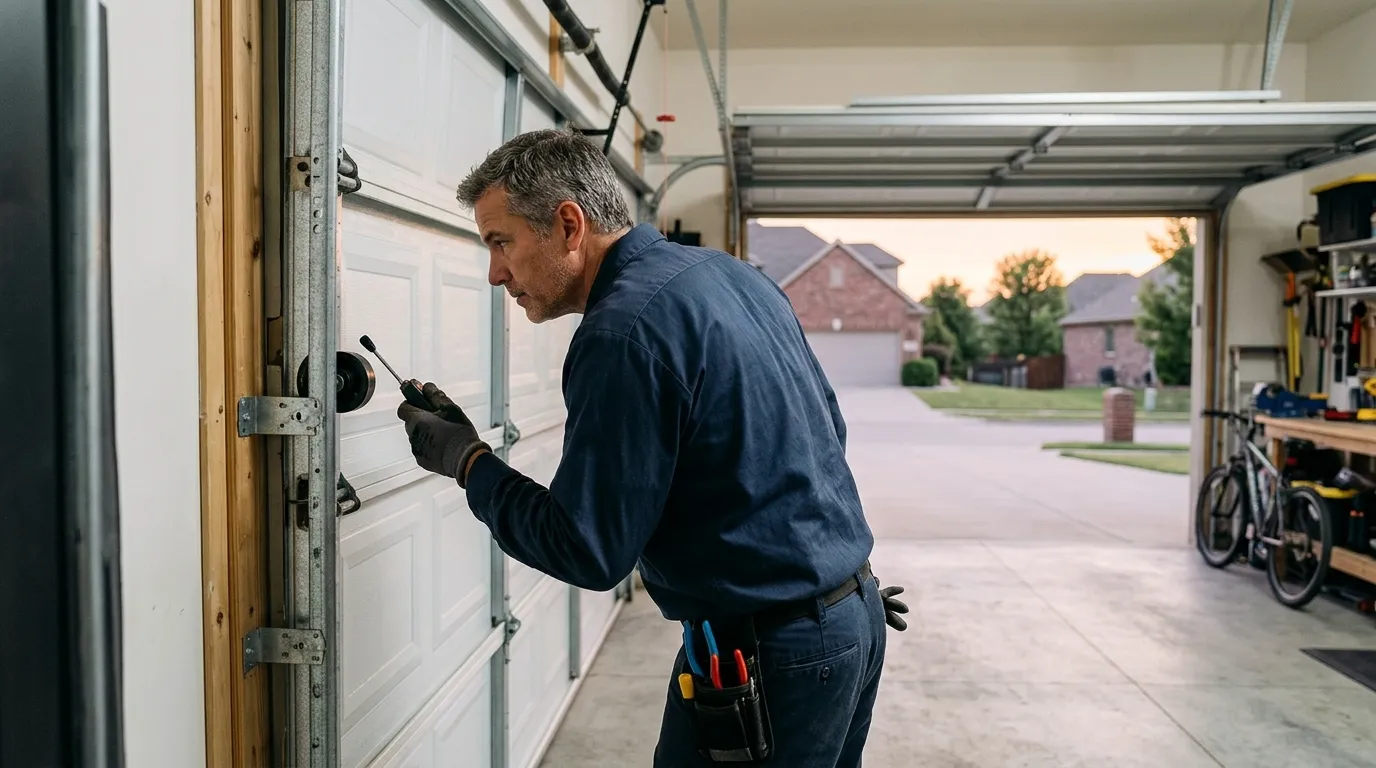
Garage Door Repair in Keller
Garage Door Repair for Keller's Late-90s Housing Stock
Keller homes went up mostly in the late 1990s. That means specific opener and spring hardware - here's what actually fails and what the fix looks like.
- Licensed & Insured
- Same-Area Service Calls
- Upfront Pricing
What Happens When You Call
-
1
Call or Request a Quote
Tell us what the door is doing and roughly how old the house is - that alone points us toward the likely part before a truck leaves.
-
2
On-Site Diagnosis
A tech checks the spring, cables, tracks, and opener in person and tells you plainly what is actually wrong.
-
3
Straight Price, No Surprises
You get a number before any work starts. It covers parts and labor, nothing added after the fact.
-
4
Fixed the Same Visit
Most repairs are done in one trip. If a part needs sourcing, we tell you that upfront instead of guessing.
Can You Do This Yourself
Keller's median home was built around 1999, which puts most garage doors here right at the edge of a hardware generation shift. A lot of these houses came with steel sectional doors on standard torsion springs and chain-drive openers that were the builder-grade default of that era.
If your opener is grinding, clicking, or refusing to close, a homeowner can usually check the safety sensors, clear the track of debris, and make sure the drive belt or chain isn't slack. That covers maybe a third of service calls.
What you should not touch is the torsion spring itself. Late-90s builder installs typically used a single spring sized for a lighter door, and winding cones under tension have put people in the ER for less. If the door won't budge, or one side drops faster than the other when you pull the release, that's spring or cable territory, not a Saturday project.
With 16,058 households in this pocket of the service area, a good number of these doors are now 20-plus years old and due for the kind of fatigue failure that shows up suddenly rather than gradually. If your door was fine yesterday and dead today, that's usually mechanical, not electrical, and it's worth a call rather than a guess.
The Complications
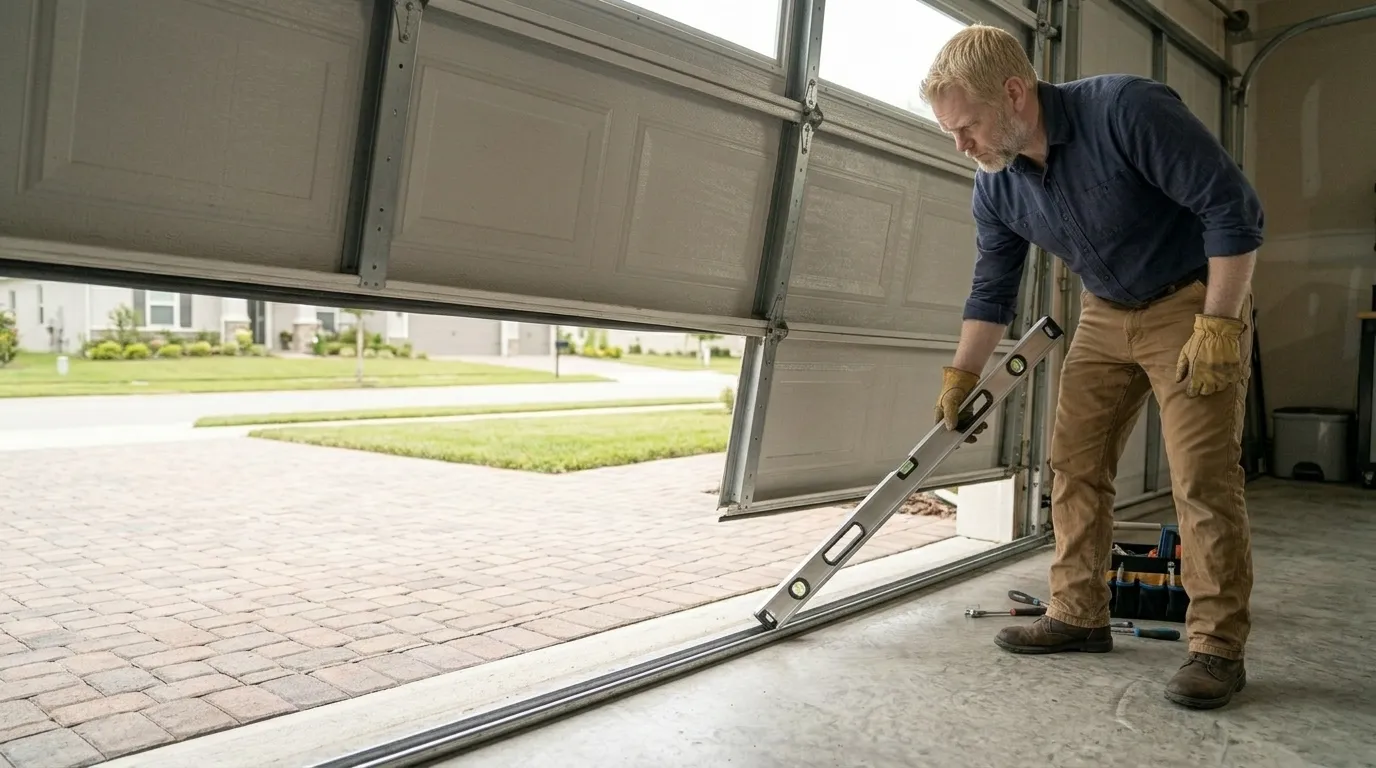
The complication in Keller isn't the door design, it's the age math. A house built in 1999 is now old enough that original springs, rollers, and openers are past their rated cycle count, but the house itself doesn't look old, so a lot of owners assume the hardware is newer than it is. That mismatch causes delayed repairs - people replace a dead remote three times before they realize the opener's logic board is failing.
The other factor is travel. This job is covered from Carrollton, about 19 miles out, so diagnosis has to happen mostly over the phone before a truck rolls - we need to know the door's approximate age, whether it's one spring or two, and what the opener brand plate says, so the right parts are on the truck the first time. A wasted trip because of a missing part detail costs everyone time.
With median household income here at $172,654, we also see more owners opting for full opener upgrades instead of patch repairs once a unit hits the 20-year mark, since the labor-to-replace-versus-repair math tips that direction sooner than it would on a cheaper unit.
What the Fix Involves
For a broken torsion spring, the fix is matching spring wire size and wind to the door's actual weight, not just swapping in whatever's on the shelf - builder-grade doors from the late 90s often carry a single spring rated tighter than what's typical on newer double-spring setups, so an undersized replacement fails again within a year.
For an opener that's dead or intermittent, the fix usually starts with the circuit board and safety sensor alignment before anything gets replaced wholesale. Chain-drive units from this era are loud by design, not necessarily broken - a homeowner mistaking normal chain noise for a failing motor is common enough that we check the drive system first.
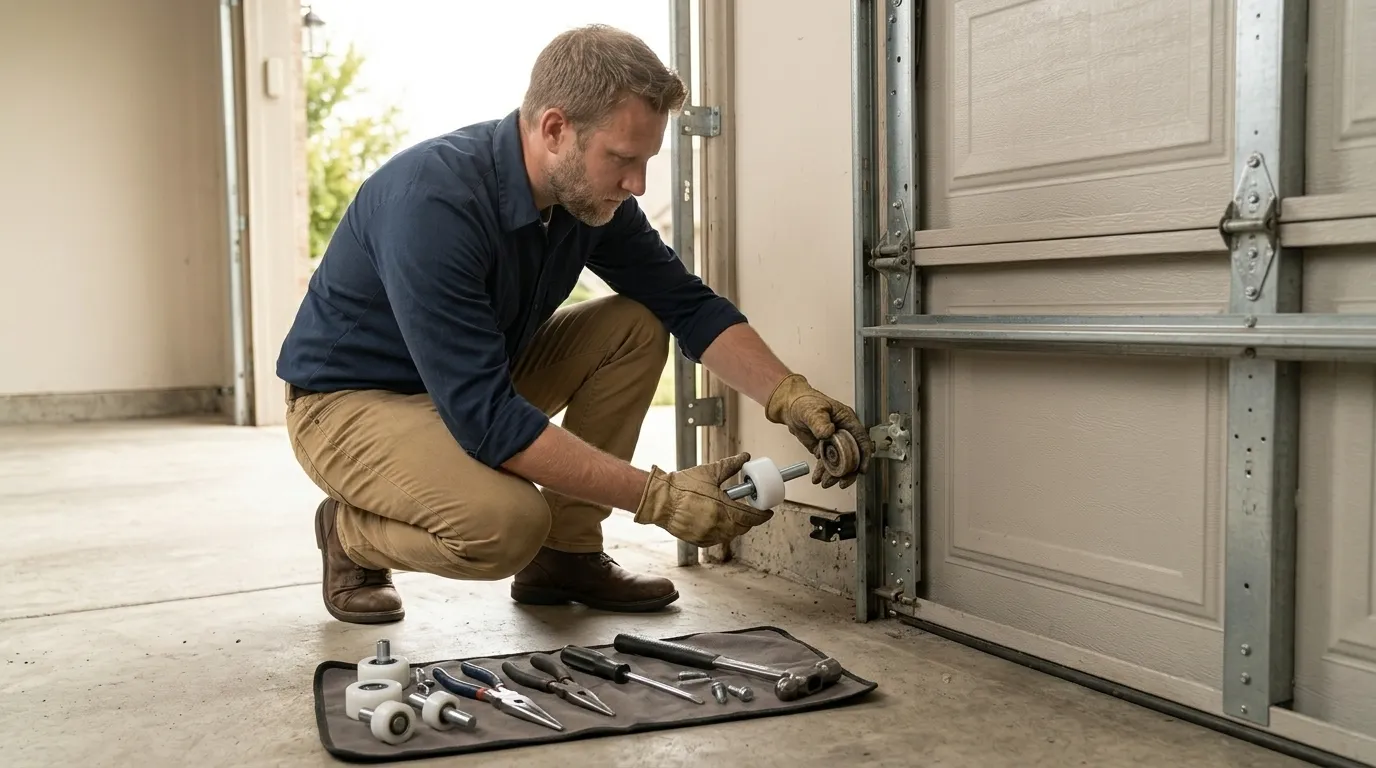
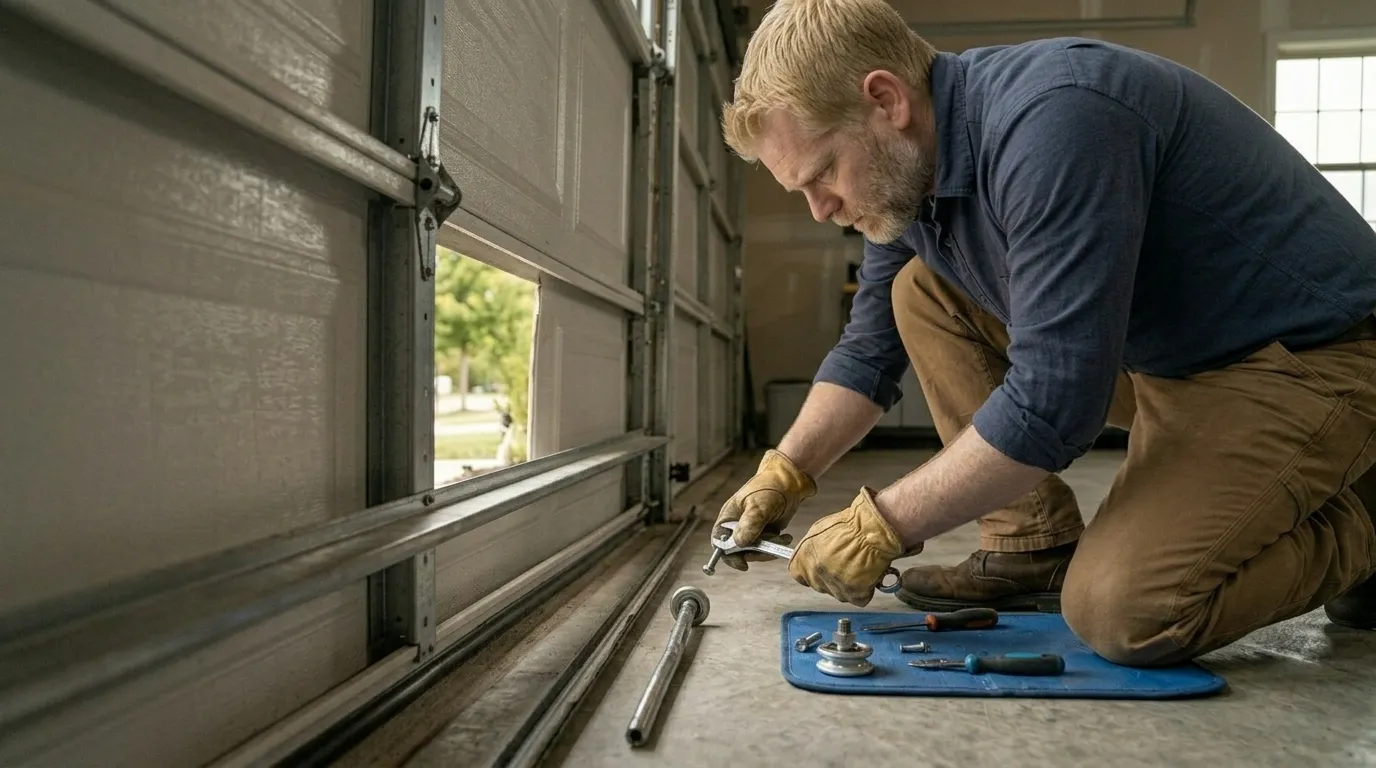
Cable and roller wear shows up as a door that shudders or drifts off-track partway through its cycle. On a house this age, we're usually replacing all rollers on one side at once rather than one at a time, since if one's worn the rest are close behind. None of this requires touching the door panels themselves unless there's separate dent or panel damage, which is a different job entirely.
Time on the Job
A straightforward spring replacement on a single door, once the truck is on-site with the right parts, typically runs under two hours. Cable and roller work on both sides of a door adds time - figure closer to two and a half to three hours if we're doing a full roller-and-cable service rather than a single point of failure.
Opener repairs vary more. A sensor or board swap is quick. A full opener replacement, including removing an older chain-drive unit and running a new belt-drive system, is closer to half a day once you count mounting, wiring, and safety testing.
The honest limitation here: because this job comes from Carrollton, roughly 19 miles out, we can't promise same-day arrival the way a Keller-based outfit might. We schedule around the drive, and if a part isn't something we'd normally carry for a 1999-era door, that adds a day for sourcing rather than us guessing with a wrong-size spring.
The Cost of This Job
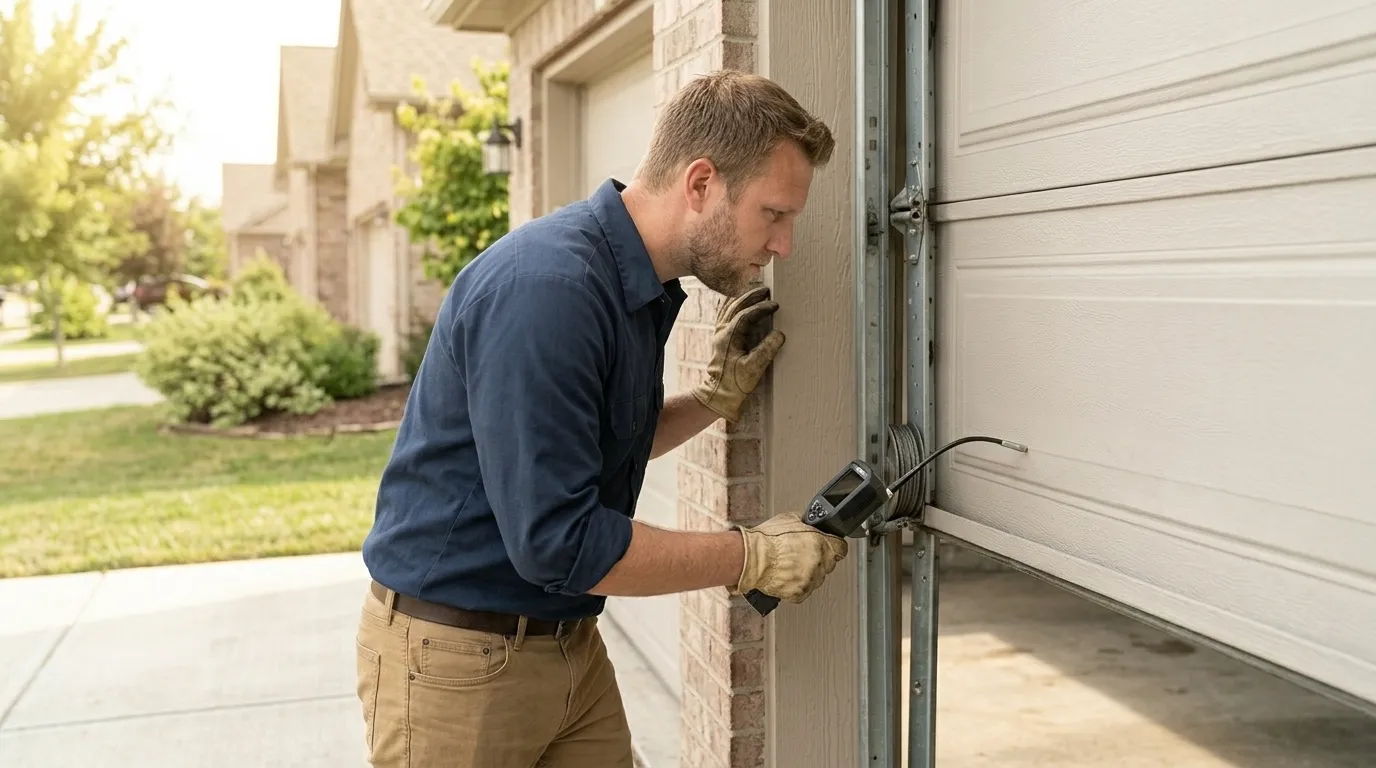
We don't have a published price list for this service area to quote here, and posting a number without knowing your specific door, spring count, and opener brand would be a guess dressed up as a fact. What we can say is that the age of Keller's housing stock - mostly built in the 1999 range - means most jobs here fall into predictable categories: single spring swap, dual spring swap, roller and cable service, or opener replacement, rather than exotic custom-door repairs.
With median household income in this area at $172,654, we do see more owners choose to replace an aging opener outright rather than nurse a 20-plus-year-old unit through repeated small fixes, since the total cost difference over a few years often favors replacement. That's a judgment call we can walk through on the phone once we know your opener's age and symptoms, not something we'll push either direction without seeing the unit.
What Causes It Around Here
The climate here runs in a moderate heat band rather than extreme, so we're not dealing with the kind of thermal cycling that cracks panels or warps tracks the way you'd see in a harsher swing climate. The bigger driver of failures in Keller is simply hardware age catching up with a housing stock that's mostly two to three decades old now, with a median build year around 1999.
Spring fatigue is the top call: torsion springs are rated for a set number of open-close cycles, and a spring installed when a house was new is well past that count by now, especially on a door used daily for two decades. Second most common is opener electronics - circuit boards and safety sensor wiring degrade with age regardless of climate, and builder-grade openers from the late 90s weren't built with today's expected service life in mind.
We don't see much moisture or humidity-driven wood rot on doors here, since most of this stock is steel sectional rather than wood-panel construction, which simplifies the failure list to mechanical and electrical rather than material decay.
Talk to a Keller Technician First
Describe what the door is doing and get a straight answer on what it likely needs.
Other Garage Door Services in Keller
Recent Work in Keller
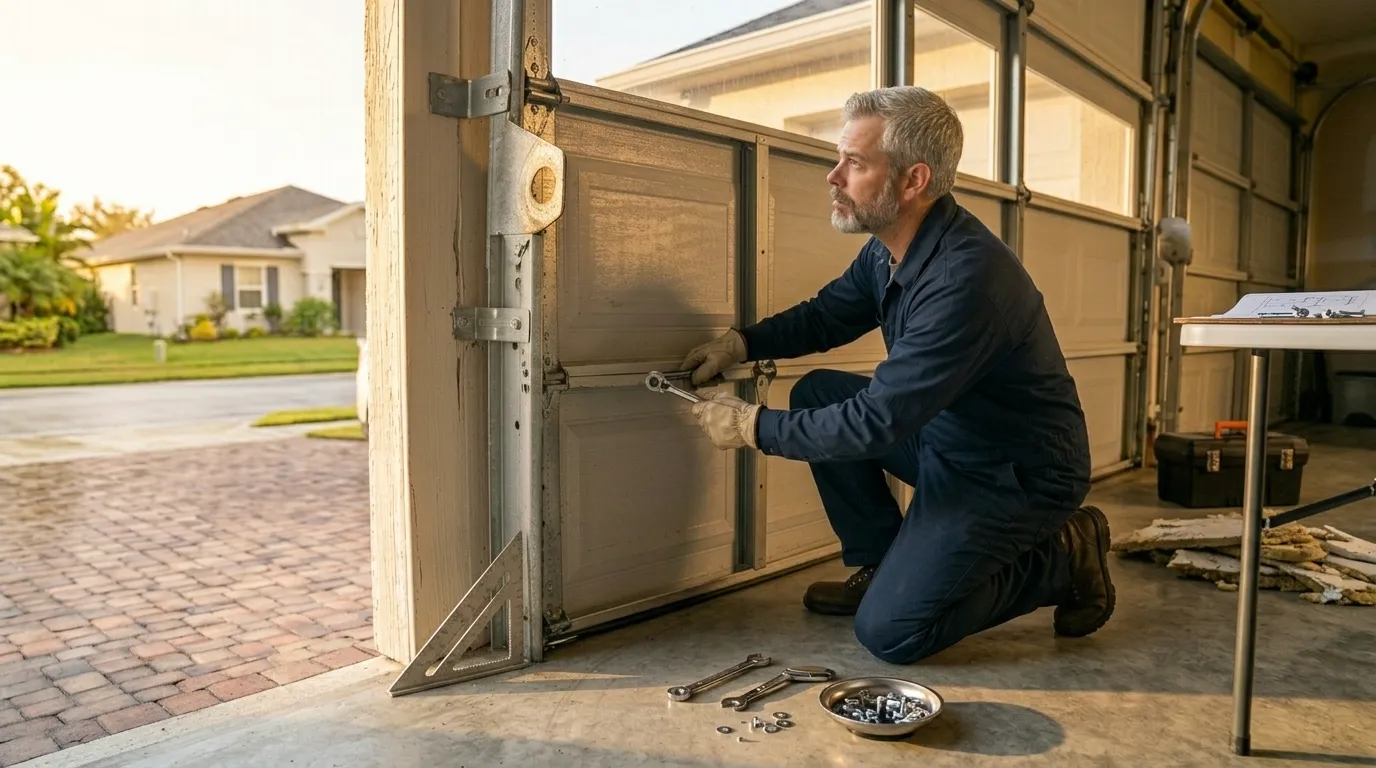
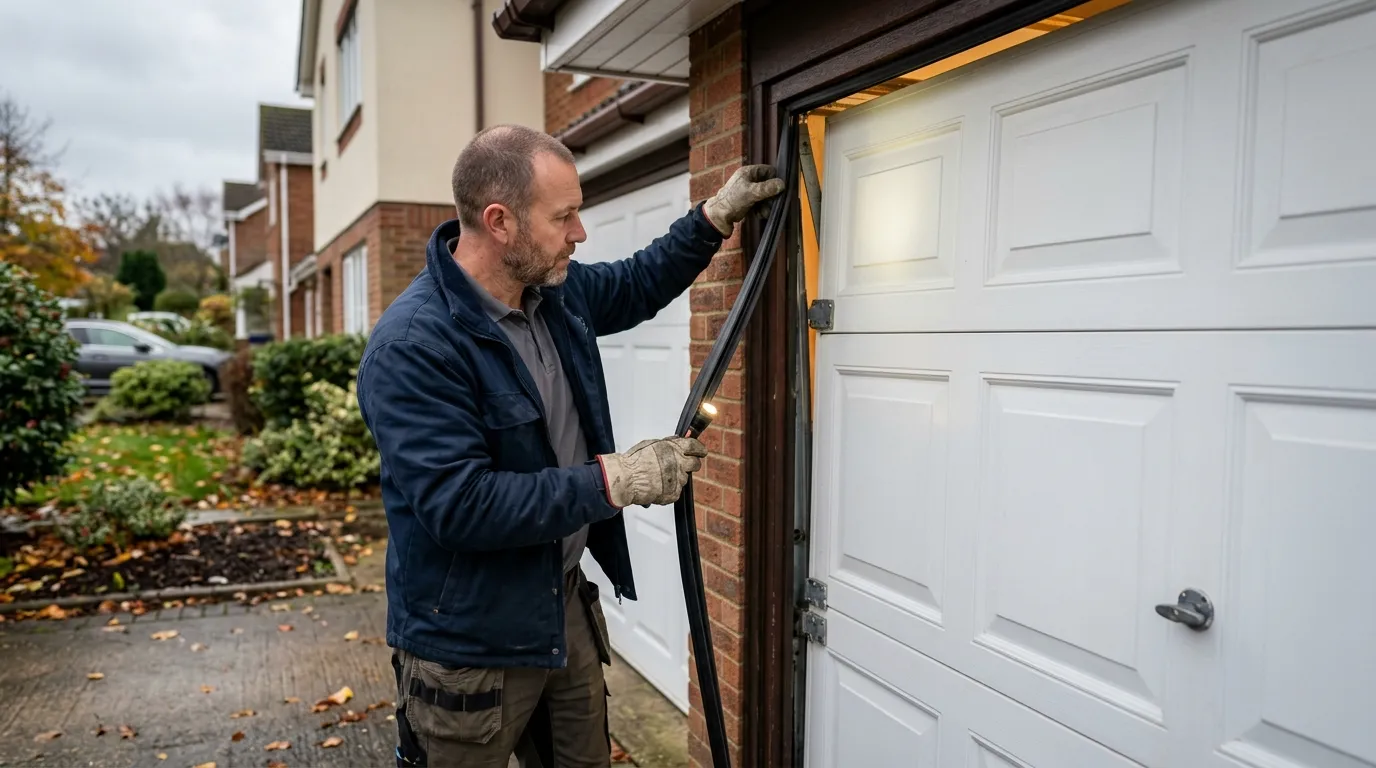
A look at jobs our crew has been on nearby.
Why Keller Calls Us
Frequently Asked Questions
How old is a typical garage door in Keller likely to be
Most homes in this part of the service area were built around 1999, so if your house is original, your door hardware is likely pushing 20-plus years old. That's well past the rated cycle count for most torsion springs and openers, which is why spring failure and opener electronics are the two most common calls we get from this area.
Do you have a shop in Keller
No. This job is covered from Carrollton, about 19 miles away. We don't have a branch or depot in Keller, so scheduling depends on the drive and on knowing your door's spring count and opener brand ahead of time so the right parts are on the truck.
Is it worth repairing an old opener or replacing it
It depends on the unit's age and what's actually failed. A dead sensor or board is usually worth fixing. A chain-drive opener from the late 1990s that's had multiple failures is often better replaced outright, especially given the total repair cost over a couple more years versus one replacement.
Need Garage Door Repair in Keller?
Call now for straight answers on cost and timing.