
Service
Garage Door Off Track: Why It Happens in Carrollton Homes
Carrollton homes built from the 1970s through the 2000s share the same off-track failure points. Here's why it happens and what the repair actually involves.
- Licensed & Insured
- Same-Area Service Calls
- Upfront Pricing
What Happens When You Call
-
1
Call or Request a Quote
Tell us what the door is doing and roughly how old the house is - that alone points us toward the likely part before a truck leaves.
-
2
On-Site Diagnosis
A tech checks the spring, cables, tracks, and opener in person and tells you plainly what is actually wrong.
-
3
Straight Price, No Surprises
You get a number before any work starts. It covers parts and labor, nothing added after the fact.
-
4
Fixed the Same Visit
Most repairs are done in one trip. If a part needs sourcing, we tell you that upfront instead of guessing.
What Causes It Around Here
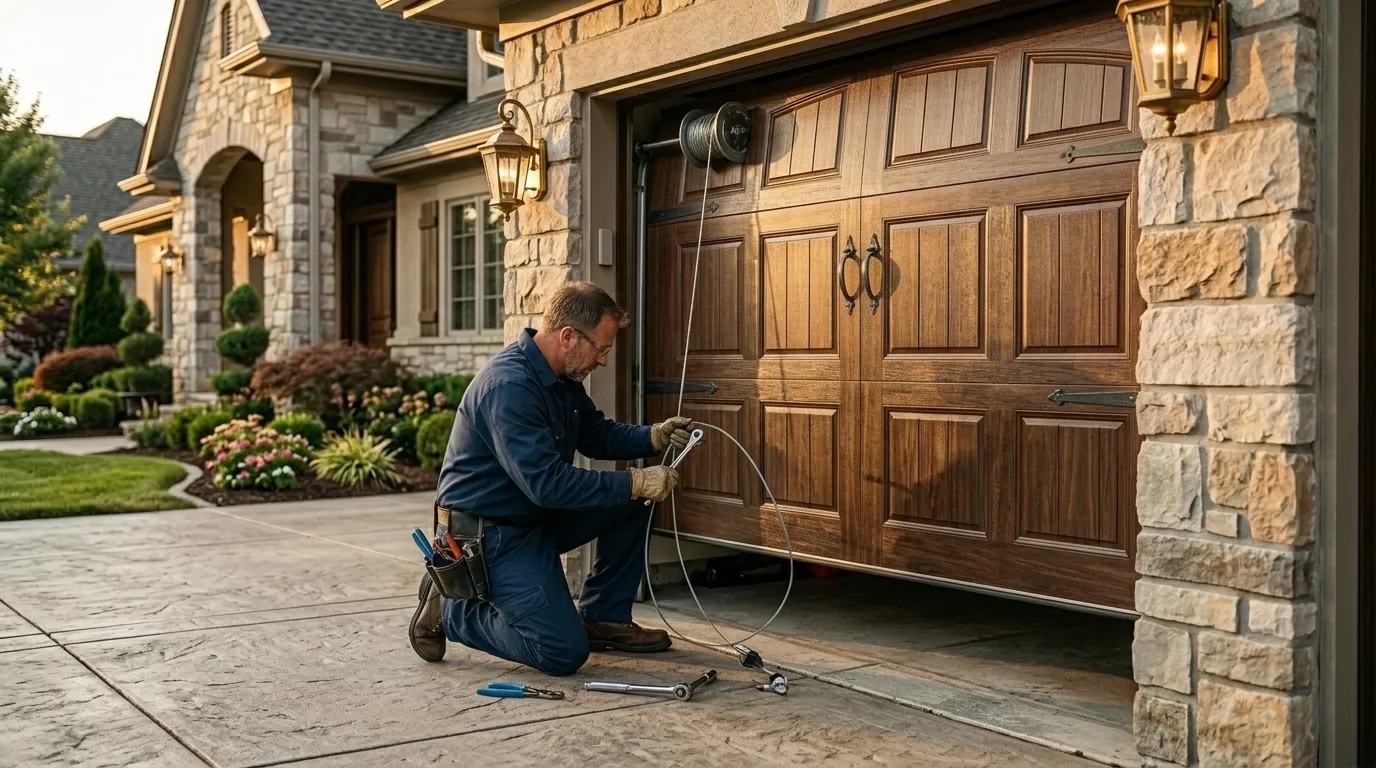
Most of the housing stock in this service area went up between 1973 and 2014, with the median build year landing around 2000 and most of the 23 named areas we cover built out during that 2000s wave. That matters because doors from that era almost all use roller-and-track systems on steel tracks bolted to the jamb with a handful of brackets - and after fifteen to twenty years, those brackets loosen, the track bends where a roller has been riding rough, or a cable frays and lets one side of the door drop while the other keeps climbing.
The climate here sits in the moderate heat band, not the extreme swings that crack concrete slabs or warp wood doors in a season. What we see instead is slower wear: track brackets that back out a quarter-turn at a time from years of daily cycling, rollers that dry out and start binding, and hinges that stretch their mounting holes.
None of that is dramatic. It just adds up until one day the door catches, jumps the track, and stops moving.
A door that's badly off track almost always traces back to one of three things: a broken cable, a bent track section, or a roller that finally gave out after riding worn for months. We see all three across the service area's 2000s-era construction on a regular basis, and the fix depends on which one it is.
What the Fix Involves
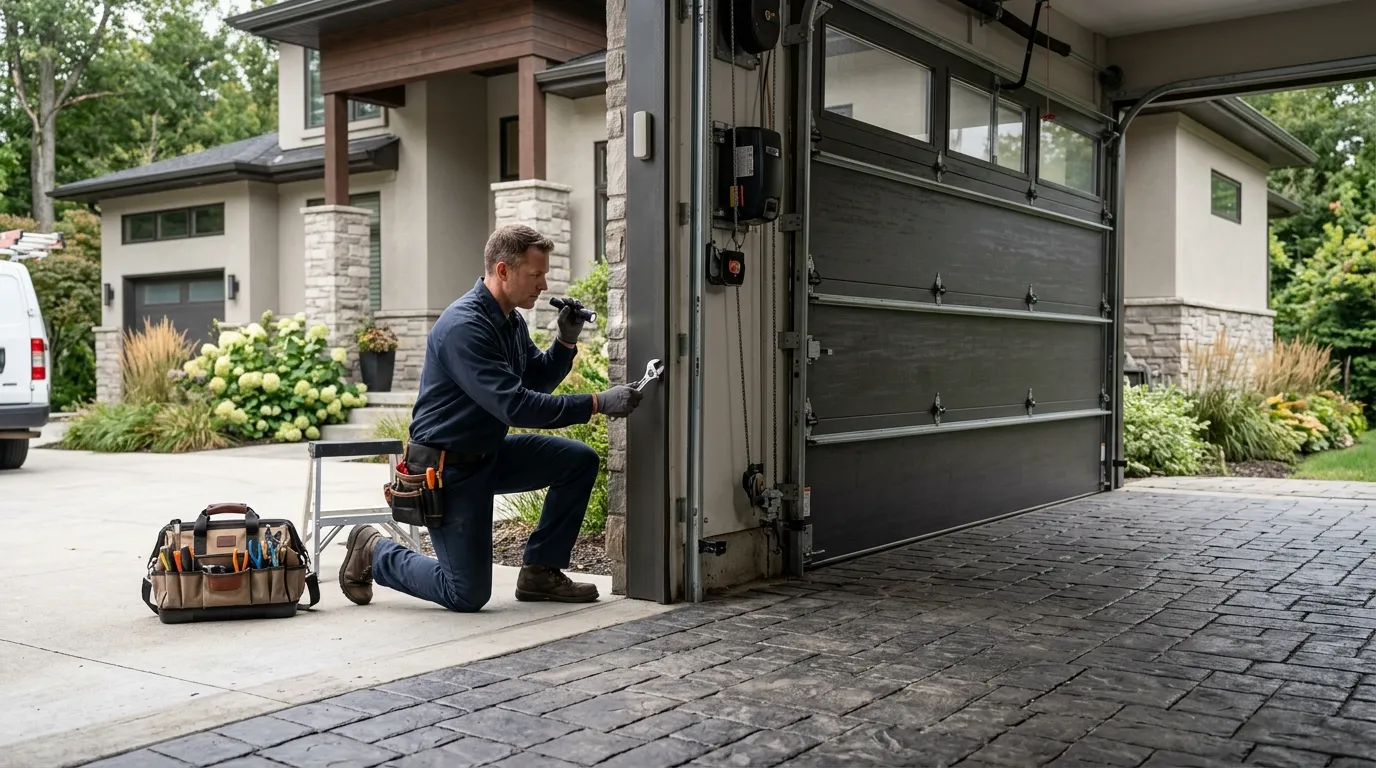
First we find out if the door is actually off the track or if something else is mimicking it - a broken spring will also make a door hang crooked, and that's a different repair entirely. Once we confirm it's a track issue, the job usually breaks down into one of two things: re-seating the door and straightening or replacing a bent track section, or replacing the rollers and hardware that let it jump in the first place.
We don't force a bent track back into shape and call it done. Bent steel track that's been forced back straight tends to bend again at the same spot within a year, so if the track is bent more than a little, we replace that section rather than hammer it out. If the cable snapped, that gets replaced along with a check of the drum and spring tension, since a cable rarely breaks on its own - it's usually a symptom of something else working loose first.
One limitation worth saying plainly: if the door itself is warped or the track brackets have pulled out of rotted jamb wood, straightening the track won't hold. In those cases we'll tell you it's a door or framing repair, not a track repair, rather than charge you for a fix that won't last.
How It Shows Up
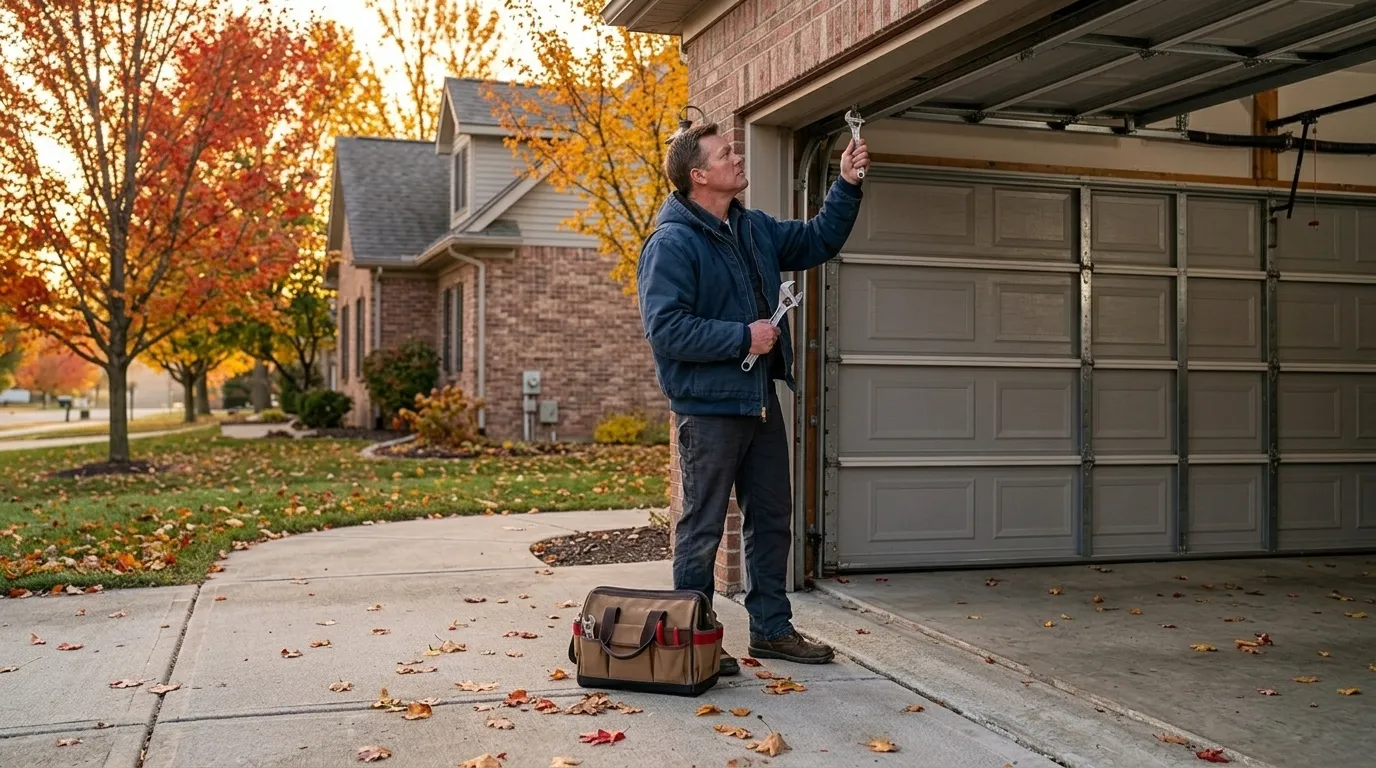
It rarely looks the same twice. Sometimes it's a door that stops halfway up and won't go further in either direction.
Sometimes it's a door that closes fine but leaves a gap along one side at the bottom, which usually means one roller has already jumped the track even though the door still moves. Other times you'll hear it before you see it - a grinding or popping sound as a roller catches on a bent spot each cycle.
A fair number of the calls we get across this service area's owner-occupied houses come in after the homeowner tried to force the door closed by hand once it stuck, which can bend the track further or pull a bracket loose from the jamb. If a door is fighting you, the better move is to stop and call rather than push it - a door that's fifty pounds and off its track can come down faster than you expect.
We also see it after someone's opener has been straining for weeks, running slower or louder than it used to. That strain is often the opener trying to pull a door that's already binding on a track, and it's worth a look before the opener itself gives out too.
What Is on the Truck
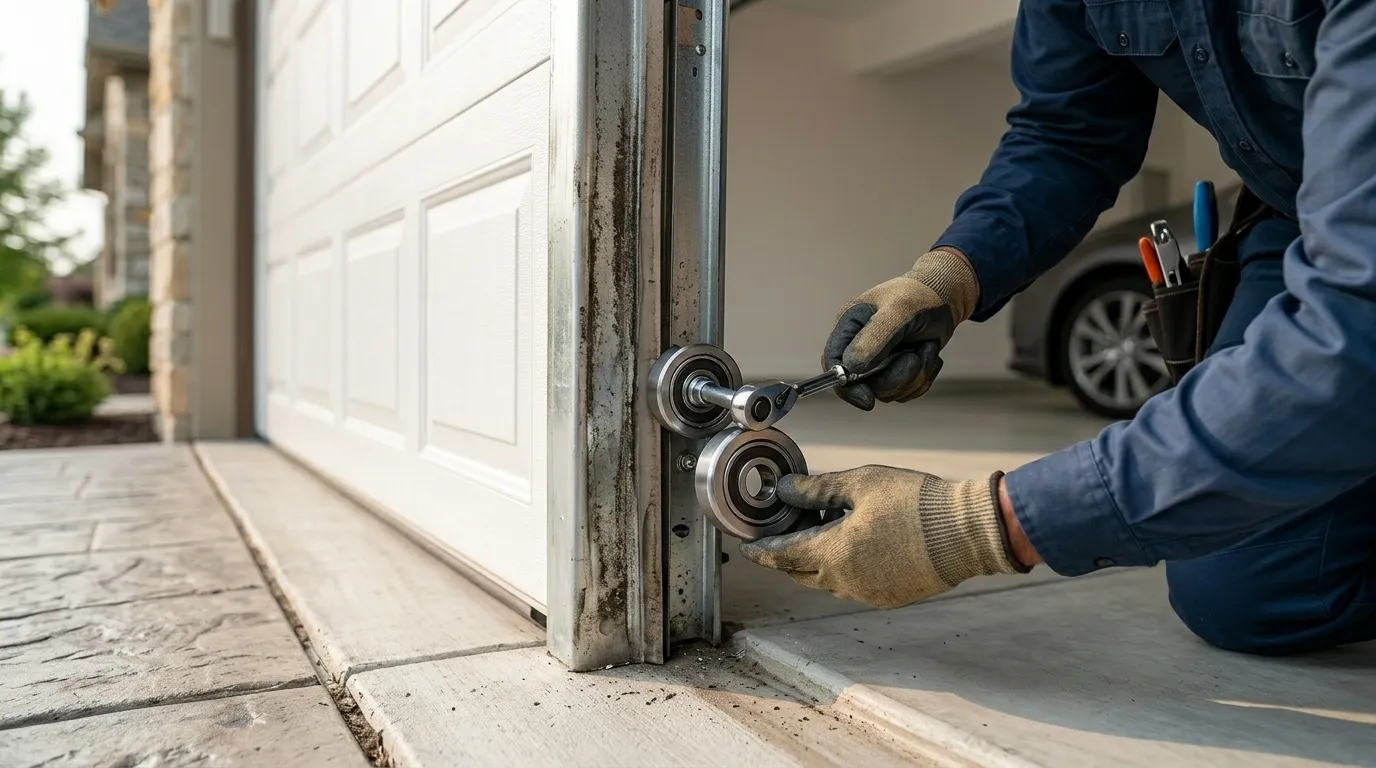
For an off-track call we carry replacement rollers (nylon and steel), lengths of standard track, cables, and the brackets and lag bolts to remount track into solid jamb. Most calls across the service area's households get resolved with parts we're already carrying, since 2000s-era track and hardware sizing is fairly consistent from house to house.
What we don't carry on the truck is custom or discontinued track for older doors outside that typical build range, or replacement panels for doors that are structurally warped rather than just off track - those get ordered once we've seen the door in person. If your door needs one of those, we'll tell you upfront rather than have you wait on a truck that won't have it.
Talk to a Technician Before You Book
Describe what the door is doing and get a straight answer on what it likely needs.
Jobs Like Yours
Recent work from this service line.

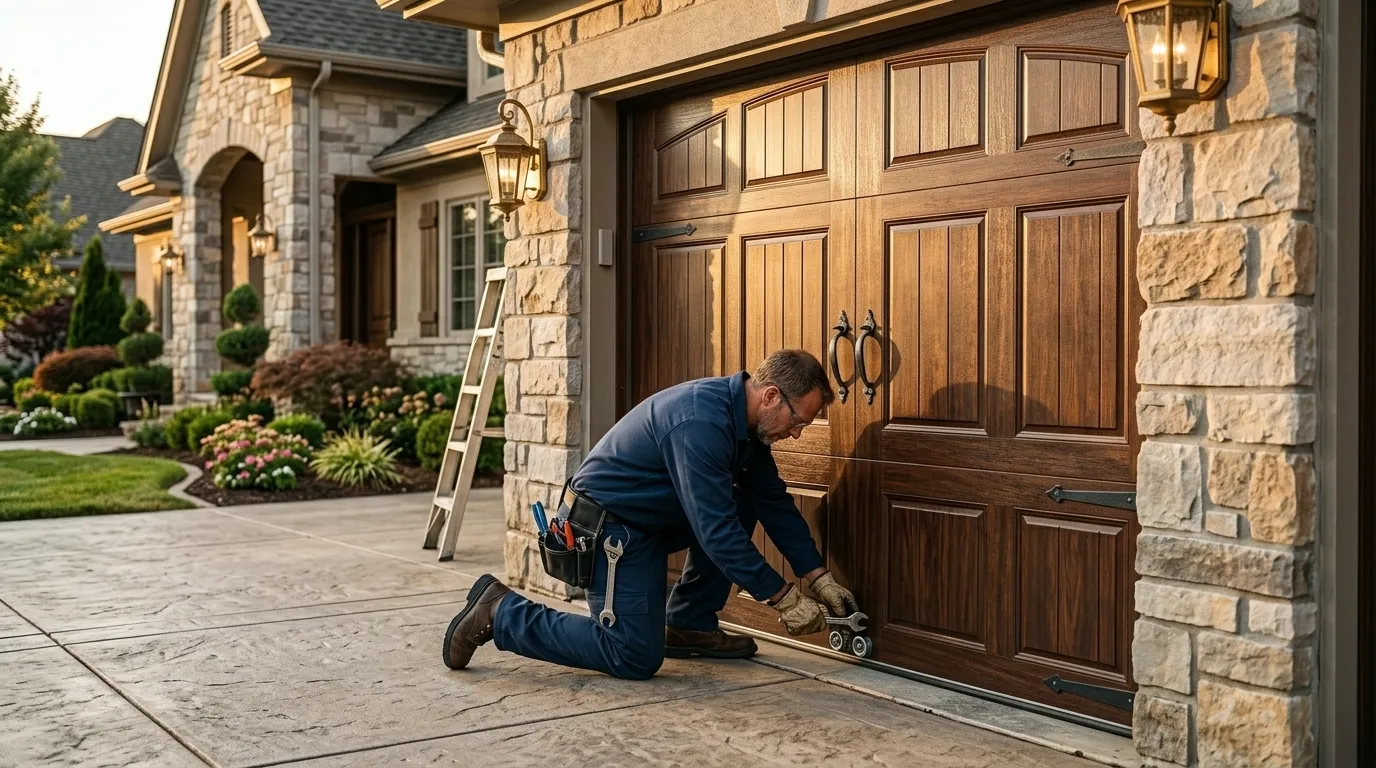
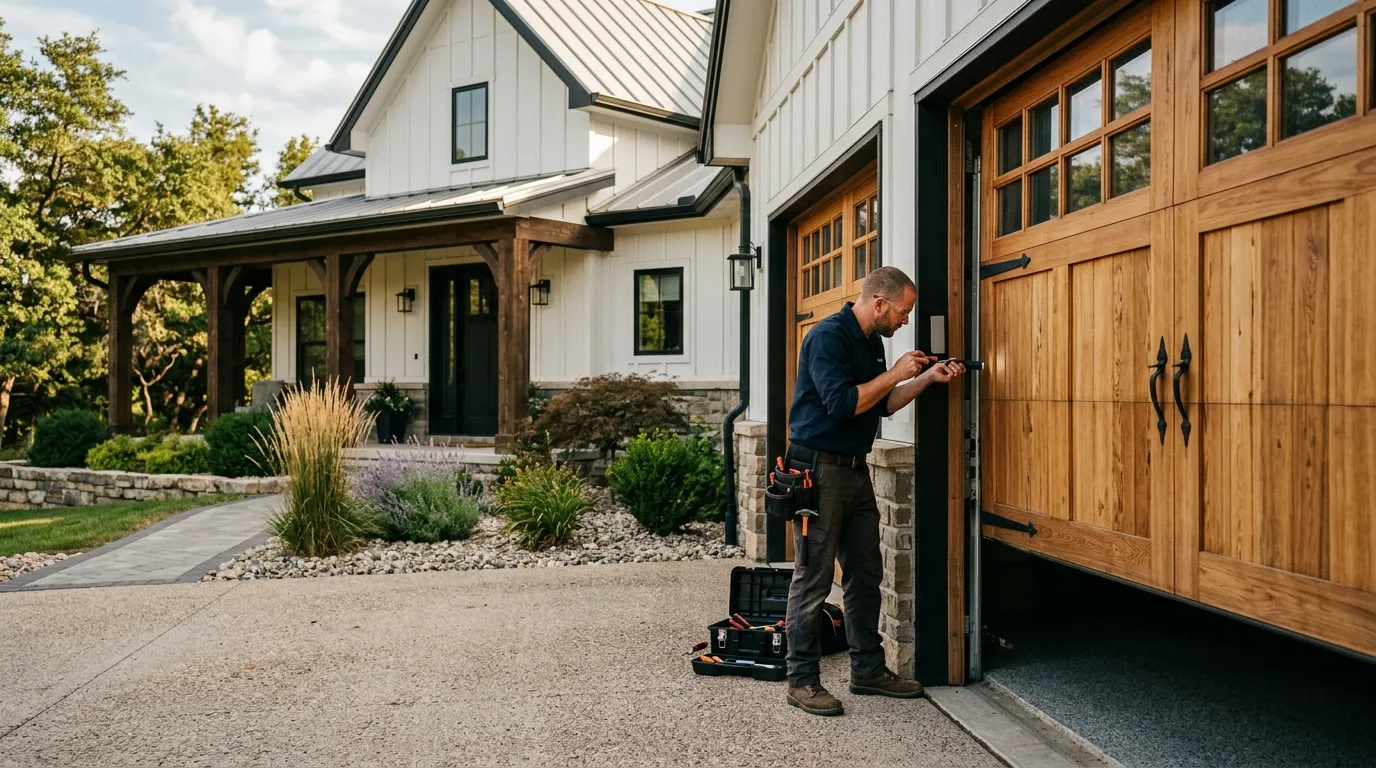
Why Carrollton Calls Us
Frequently Asked Questions
Can I push my garage door back onto the track myself?
We'd rather you didn't. A residential door section weighs more than most people expect, and if a spring is still under tension, forcing the door can snap a cable or drop the door suddenly. If it's stuck or hanging crooked, kill the opener power and call rather than push on it.
Is an off-track door always a track problem?
No. A door that hangs crooked can also mean a broken spring or a snapped cable, both of which look similar from the driveway. We check all three before quoting a repair, since a track-only fix won't hold if the real problem is a spring.
Why does this happen more in older sections of the service area?
Track brackets loosen gradually with age and daily cycling. Houses built in the earlier part of the 1973-2014 range have had more years of that wear than the newer 2000s builds, so the hardware is more likely to have backed out or stretched its mounting holes.
Will a bent track just bend again after you fix it?
If we straighten a lightly bent section, it can hold for years. If the bend is severe, straightening it usually fails again within months, so in that case we replace the section instead of reshaping it.
Need Garage Door Off Track: Why It Happens in Carrollton Homes?
Call now for straight answers on cost and timing.